Model 3 referral code UK: how to claim your free Supercharging
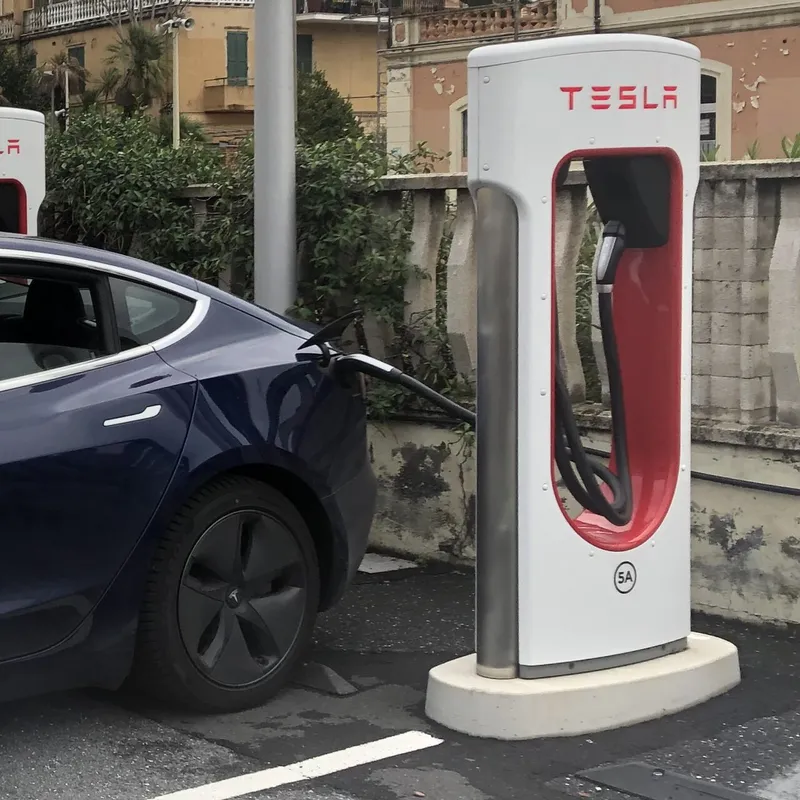
The Model 3 is Tesla's entry point in the UK, and the referral benefit applies to new orders. Here's the Model 3-specific way to make sure you actually get the 650 free Supercharging miles.
Do this before you configure
Open a referral link first, then start your Model 3 configuration in the same session. If you begin configuring without arriving via a link, you can't add a code later.
Check the order summary
Before paying, confirm the referral benefit line appears in your Model 3 order summary. No line, no benefit — reopen the link and restart.
Model 3 notes
Efficiency on the Model 3 tends to sit at the higher end (around 4 mi/kWh in mild conditions), so 650 miles can stretch a little further than on a heavier Model Y. The miles land on your account after delivery, not at purchase.
Does the Model 3's efficiency make the 650 miles worth more, or less?
It depends on something Tesla doesn't spell out, and getting this straight matters more than any other Model 3-specific detail. The benefit is quoted in miles, but charging credit is ultimately consumed in kilowatt-hours — and how those two are reconciled decides who comes out ahead.
| If the credit is… | Then the Model 3's efficiency… |
|---|---|
| A fixed kWh amount, calculated from 650 miles at some assumed efficiency | Works in your favour. Being the efficient car, a Model 3 travels further on that same energy than a heavier Tesla would — you may well exceed 650 real miles. |
| Tracked as actual miles driven | Is neutral on distance. You get 650 miles either way, but you consumed less paid energy covering them, so the credit displaced a smaller bill. |
We can't confirm which applies at primary source, so we won't tell you. What we will say is that pages asserting an efficient car gets "fewer real-world miles" from a mileage-denominated credit are stating one of these cases as fact without evidence — and it's the case that happens to be less favourable.
How to settle it for yourself: after delivery, look at what the credit is expressed as in the Tesla app. If it shows a kWh balance, you're in the first row. If it counts down in miles, you're in the second. That single observation tells you more than any comparison page.
What a Model 3 actually costs to charge in a year
Useful context for judging whether 650 miles is a big deal. At a commonly reported real-world 3.6–4.0 mi/kWh, 10,000 miles a year needs roughly 2,500–2,780 kWh. What that costs depends almost entirely on where you charge:
- Off-peak on a Supercharger membership, around 22p/kWh — roughly £550–£610 a year.
- At peak Supercharger rates, up to about 60p/kWh — roughly £1,500–£1,670 a year.
Set 650 free miles against that and the honest conclusion is that it's a useful one-off rather than a transformation — somewhere between a few weeks and a couple of months of charging, depending on your tariff. The Model 3 being the cheapest Tesla to run is the larger and more durable saving; the referral is a free extra on top of it.
Figures are illustrative arithmetic from the bands above, not quotes. Substitute your own lifetime mi/kWh from the Tesla app and the per-kWh rate you actually pay.
Pillar: Apply before ordering · Related: Model Y referral code UK
Your UK Tesla Referral Link
steven787345
Copy link copies the whole URL — there is no checkout field for a bare code. Click Open at Tesla first, then configure your car; the benefit is applied automatically before you pay.