Model Y referral code UK: step-by-step at checkout
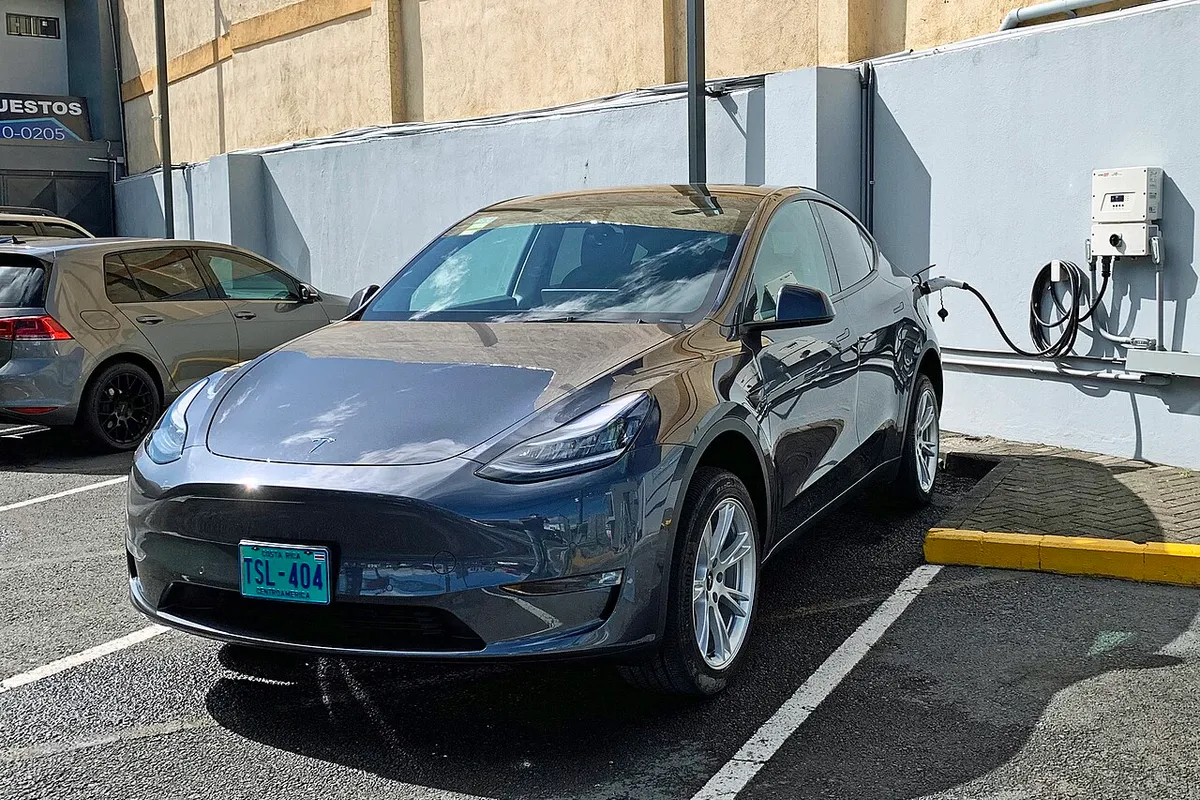
The Model Y is the UK's best-selling Tesla, so this is the referral most buyers are chasing. The mechanics are the same as the Model 3, with a couple of Model Y-specific notes.
The checkout sequence
Referral link first → configure your Model Y → confirm the benefit shows in the order summary → pay. The benefit can't be added after the order is placed.
Model Y efficiency and the 650 miles
The Model Y is heavier than the Model 3, so real-world efficiency is often nearer 3.5 mi/kWh. That means the same 650 free miles equate to slightly more kWh and a similar £70–£100 value — see the full maths on our value page.
Ordering in store
Buying a Model Y from a UK Tesla store? Give the advisor the referral code before they place the order.
The Model Y efficiency question, answered properly
You'll read that a heavier car gets "fewer real-world miles" out of the 650. That is one of two possible answers, stated as though it were the only one — and it's worth understanding why, because the direction of advantage actually flips depending on a mechanism Tesla doesn't publish.
The benefit is quoted in miles, but charging is consumed in kilowatt-hours. How those reconcile decides the outcome:
| If the credit is… | Then for a Model Y… |
|---|---|
| A fixed kWh amount, derived from 650 miles at some assumed efficiency | The common claim holds: being heavier, you'd cover somewhat less than 650 real miles on that energy. |
| Tracked as actual miles driven | The claim is wrong, and it inverts. You get the full 650 miles, and because a Model Y uses more energy covering them, the credit displaced more paid electricity than the same reward would on a Model 3 — so it's worth more in pounds, not less. |
We can't verify which one applies, so we won't assert either. The check takes ten seconds after delivery: if the Tesla app shows the credit as a kWh balance, you're in the first row; if it counts down in miles, you're in the second — and the pessimistic version you read elsewhere doesn't apply to you.
Where the Model Y genuinely costs more, and it isn't the referral
The efficiency gap is real; it's just far more consequential as a running cost than as a referral footnote. At a commonly reported real-world 3.2–3.6 mi/kWh, 10,000 miles a year needs roughly 2,780–3,130 kWh — a few hundred kWh more than a Model 3 doing the same mileage.
- Off-peak on a membership, around 22p/kWh — roughly £610–£690 a year.
- At peak Supercharger rates, up to about 60p/kWh — roughly £1,670–£1,880 a year.
So the Model Y premium over a Model 3 is somewhere around £60–£210 a year in charging alone, every year, against a one-off referral benefit. If you're weighing the two cars, that recurring difference deserves more attention than the referral does — and unlike the referral, you can't opt out of it later.
Illustrative arithmetic from the bands above, not quotes. Use your own lifetime mi/kWh from the Tesla app and the rate you actually pay.
Pillar: Apply before ordering · Related: Model 3 referral code UK
Your UK Tesla Referral Link
steven787345
Copy link copies the whole URL — there is no checkout field for a bare code. Click Open at Tesla first, then configure your car; the benefit is applied automatically before you pay.