Does free Supercharging wear out a Tesla's battery? We ran the numbers
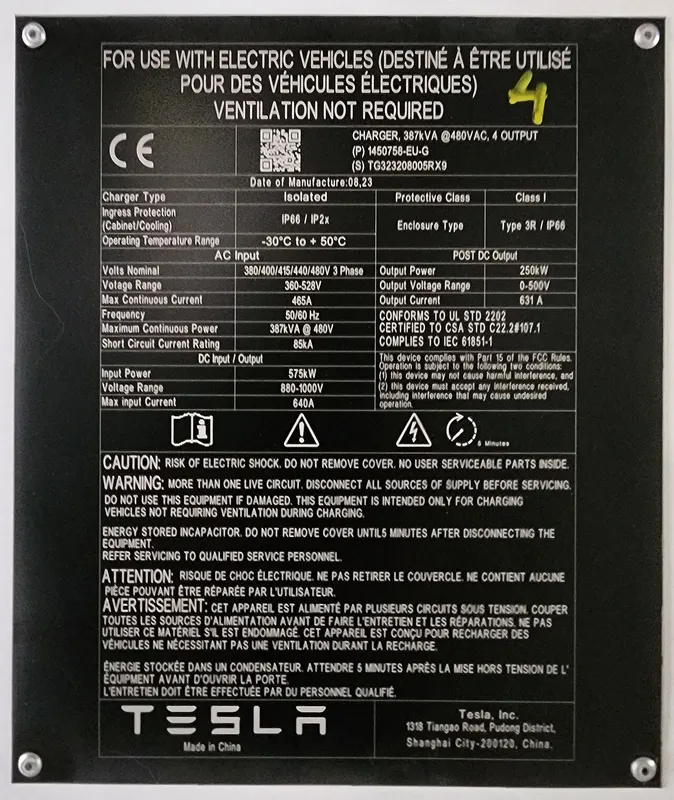
A UK buyer working through Step 1 of this site sees the same line every time: click the link, then claim roughly 650 free Supercharging miles. A reasonable question follows, and we get it often enough to answer properly: does using those miles on a Supercharger, rather than charging at home, do the battery any harm? The honest answer needs two comparisons, not one — chemistry versus chemistry, and a single top-up versus a lifetime of driving.
Two very different ways a battery "ages"
Battery engineers split ageing into two rough buckets: calendar ageing (the pack loses a little capacity just sitting there, faster in heat than in cold) and cycle ageing (capacity lost from actually charging and discharging it). Fast charging affects the second bucket because it runs more current through the cells at once, generating more heat than a slow overnight charge at home. That's the mechanism people are really asking about when they ask if Supercharging "wears out" a battery.
What Tesla's own warranty guarantees, compared by trim
Start with the number Tesla is contractually on the hook for. Tesla's UK battery and drive unit warranty guarantees Model 3 and Model Y won't drop below a set capacity within a set period:
| Trim | Warranty period | Minimum capacity guaranteed |
|---|---|---|
| Model 3 / Model Y RWD & Standard | 8 years or 100,000 miles, whichever comes first | 70% |
| Model 3 / Model Y Long Range & Performance | 8 years or 120,000 miles, whichever comes first | 70% |
Source: Tesla's UK vehicle warranty page. That's the floor Tesla will repair or replace a pack for — not a prediction of what actually happens. The real-world data comes in well above it.
What actually happens: Tesla's own real-world figures
Tesla's Impact Report data, covered by Electrek in 2023, put Model 3 and Model Y Long Range packs at roughly 85% of original capacity after 200,000 miles — a 15% loss over more than a full car's typical UK lifetime of driving. Model S and Model X, with different packs, came in slightly better at around 88% (12% loss) over the same distance. Either way, that's comfortably inside the 70% warranty floor, at nearly double the mileage the warranty even covers.
Source: Electrek, "Tesla gives update on battery degradation".
The comparison that actually matters: which pack you're getting
Here's the comparison worth paying attention to, and it has nothing to do with Supercharging habits. A July 2026 study by Carla, a Swedish used-EV retailer, tested 9,954 real battery packs using AVILOO diagnostics and broke the results down by chemistry. Among Model 3s with more than 62,000 miles on the clock:
| Pack | Chemistry | Average health at 62,000+ miles |
|---|---|---|
| CATL | LFP | 93.3% |
| LG Chem | NMC (nickel) | 91.5% |
| Panasonic 77.8kWh | NCA (nickel) | 89.8% |
| Panasonic 52.4kWh | NCA (nickel) | 88.2% |
A five-point spread between the best- and worst-ageing version of the same car, all at a similar mileage. LFP's chemistry is more thermally stable and tolerates the deep, frequent charging that trips up nickel-based cells. Which chemistry you get depends on which Model 3 or Model Y you order — check the spec sheet rather than assuming, since it varies by trim and has changed over time.
Source: Electrek, "Tesla's LFP battery holds its charge better, study says" (15 July 2026).
Do the maths on your own 650 miles
Now back to the actual referral question. Our value breakdown works the 650-mile benefit out at roughly 163–186 kWh of charging (650 miles ÷ 3.5–4.0 mi/kWh). Spread that across a car's warrantied life:
- 163–186 kWh from the referral, delivered once, after delivery of the car.
- A Long Range pack is warrantied for 120,000 miles; at roughly 3.7 mi/kWh that's about 32,400 kWh of total charging over the car's warrantied life.
- 163–186 kWh is therefore around 0.5–0.6% of that lifetime total.
A one-off top-up that's half a percent of a car's warrantied lifetime charging isn't the thing driving a battery's long-term health, in either direction. The chemistry you order, and how you charge it day to day for years afterwards, are the comparisons that actually move the number.
What protects a Tesla battery, compared with what doesn't
Tesla's own charging guidance differs by chemistry, and mixing the two up is the most common mistake:
- LFP packs (many Standard and RWD trims): Tesla recommends charging to 100% for daily use, and doing so at least once a week regardless, so the battery management system can calibrate accurately.
- Nickel-based packs (typically Long Range and Performance): Tesla recommends an 80–90% daily limit, saving 100% for a long trip.
- Heat, more than cold or fast-charging frequency, is the bigger long-term factor across chemistries — one reason the UK's mild climate is comparatively kind to a Tesla pack next to hotter markets.
- A single Supercharging session — including the one your referral pays for — doesn't move any of this. It's the daily pattern over years that shows up in the numbers above, not an occasional rapid charge.
Confirm which chemistry your specific trim ships with before assuming either charging habit applies to you — it has changed across the range and by year, and the honest way to check is your delivery paperwork or Tesla's own in-app guidance for your exact car, not a blanket rule for "Tesla".
The bottom line
Order through a referral link, use the 650 free miles on a Supercharger without a second thought — it's a rounding error against a car's warrantied lifetime charging. The battery decision that actually matters is which pack chemistry you're ordering and how you charge it for the years after, not whether one early top-up came from a Supercharger instead of a home wallbox.
UK programme verified: · figures re-checked against tesla.com/en_gb
Pillar: What you get · Related: What a Model Y referral is worth, trim by trim, in the UK
Your UK Tesla Referral Link
steven787345
Copy link copies the whole URL — there is no checkout field for a bare code. Click Open at Tesla first, then configure your car; the benefit is applied automatically before you pay.